Microservices stories
Mirantis updates k0rdent platform to unify AI, containerised, and VM workloads, simplifying management across cloud, data centres, and hybrid environments.
Manhattan Associates launches Agentic AI and Agent Foundry to revolutionise supply chain operations with autonomous agents and customisable digital solutions.
Camunda partners with Hapag-Lloyd to upgrade process orchestration in its Freight Information System, boosting automation and customer experience globally.
Red Hat has integrated NVIDIA Enterprise AI Factory validated design to boost deployment of agentic AI systems across hybrid cloud environments using OpenShift AI.
CyberArk named Overall Leader in KuppingerCole's 2025 Enterprise Secrets Management report for its AI-powered identity security platform.
Lallemand has launched a new B2B self-service portal powered by commercetools, replacing traditional ordering to boost efficiency and global scalability.
Manhattan Associates has been named a Leader in the Gartner Magic Quadrant for Transportation Management Systems for the seventh consecutive year.
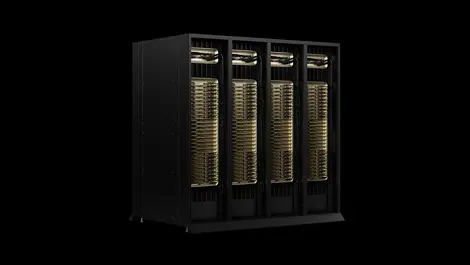
NVIDIA has launched its DGX SuperPOD infrastructure with Blackwell Ultra GPUs, revolutionising AI processing for businesses amid a fierce competition for AI capabilities.
NVIDIA has launched an AI Data Platform to enable enterprise storage providers, promising enhanced AI reasoning workloads via accelerated hardware and software solutions.
NetApp has unveiled enhancements to its AI solutions by incorporating the NVIDIA AI Data Platform, aiming to improve businesses' data utilisation and speed up AI processes.
Bud Financial is set to enhance customer experiences by leveraging DataStax's AI Platform, powered by NVIDIA, improving efficiency for clients like ANZ Bank.
Teleport has unveiled its Machine & Workload Identity Solution, aiming to streamline identity management for both human and machine entities in complex infrastructures.
F5 has launched ADC 3.0 to bolster application security and delivery, addressing the growing demands of AI applications as enterprises rapidly adopt these technologies.
NVIDIA unveils Project DIGITS, a personal AI supercomputer powered by the Grace Blackwell architecture, aimed at empowering researchers and students for USD $3,000.
Amid economic uncertainty, 82% of organisations prioritise managing cloud costs, as unchecked spending has led to staggering bills like Datadog's USD $65 million.
Solace has launched Micro-Integrations for its PubSub+ platform, enhancing real-time data management across various enterprise systems.
GoTo Financial has completed migrating its infrastructure to Alibaba Cloud's Jakarta data centres, boosting data sovereignty and service efficiency for over 20 million users.
TCS has updated MasterCraft with GenAI and Agentic AI to cut legacy IT modernisation costs by 70% and double the speed of transformation projects.
Carlsberg has enhanced its development processes by integrating GitHub's tools, streamlining coding and security while reducing operational tool sprawl.
Solace has unveiled its new PubSub+ Micro-Integrations, enhancing real-time connectivity across various enterprise technologies for improved data integration.