

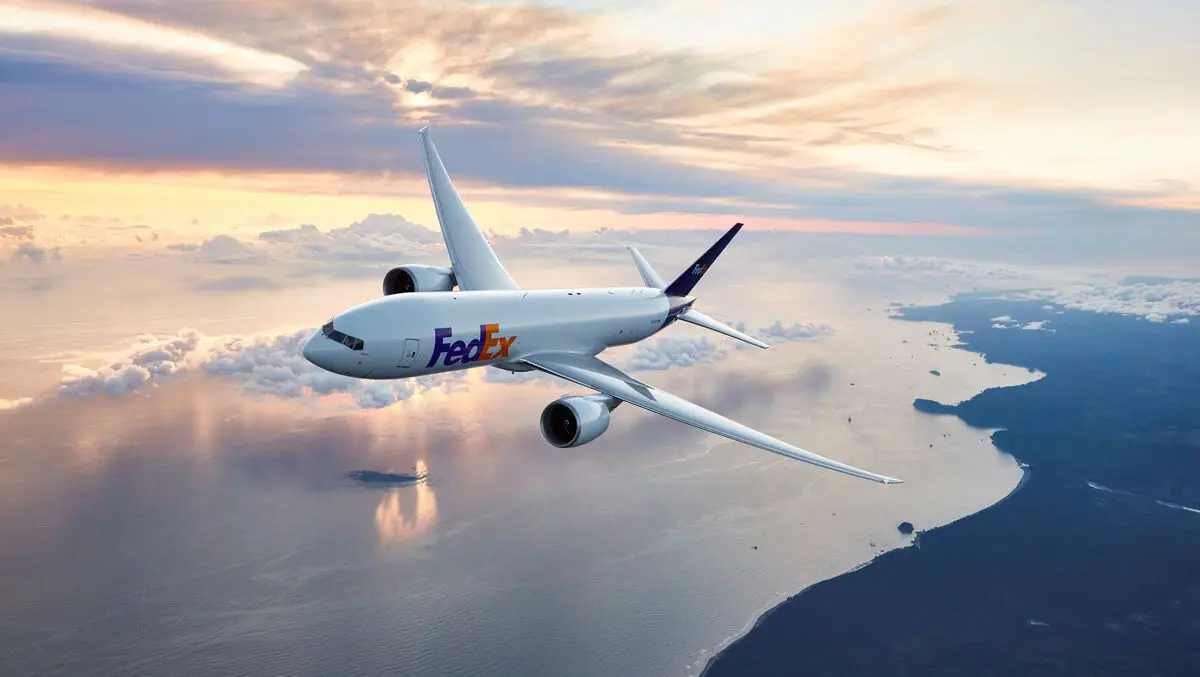
FedEx launches Guangzhou to Sydney freighter service
Wed, 5th Aug 2026
FedEx has launched a dedicated non-stop Boeing 777 freighter service between Guangzhou and Sydney, operating five times a week.
The service is designed to cut transit times for some shipments from parts of Asia to Australia by up to one day, while adding freight capacity into the Australian market. It also consolidates inbound freight from Europe, the Middle East, the Indian subcontinent and Asia through FedEx's Guangzhou hub before onward movement into Australia.
The launch comes as companies in Australia continue to adjust supply chains and expand trade links across Asia. Asia accounts for about two-thirds of Australia's global trade, or $516 billion, according to figures cited by FedEx, making air freight links an important part of regional commerce.
Trade corridor
Selected shipments from Southern Mainland China, Hong Kong SAR, Japan, South Korea, Malaysia, the Philippines and Thailand are expected to reach major Australian cities within two business days. The route is aimed at importers, exporters and small and medium-sized businesses seeking faster access to manufacturing centres and regional customers.
FedEx is using Boeing 777 freighters on the route, an aircraft commonly deployed on long-haul cargo services because of its payload and range. By assigning a dedicated aircraft to the Guangzhou-Sydney link, the company is increasing direct lift into Australia rather than relying solely on broader network connections.
That matters for businesses moving heavier consignments and higher-value goods, where air freight speed can affect stock levels and order fulfilment. Faster linehaul links can also reduce the time inventory remains tied up in transit, an increasingly important factor for firms balancing cost control with supply chain resilience.
Regional demand
FedEx cited stronger intra-Asia trade as part of the backdrop to the change, noting that the corridor recorded double-digit revenue growth in 2025. Regional supply chains are also becoming more closely connected as manufacturers and distributors look for shorter, more flexible trade routes.
For Australia, that trend has implications beyond imports. Exporters selling into Asian markets often rely on predictable outbound logistics for products with tight delivery windows, while domestic wholesalers and retailers need steadier inbound replenishment from factories across North and South East Asia.
The service also links into FedEx's domestic air and road network in Australia, allowing freight arriving in Sydney to move onward to other cities. That integration is intended to improve timing and routing options across the wider network rather than treat Sydney as a stand-alone destination.
Peter Langley, Regional Vice President, FedEx Australasia, said the company is seeing growing demand for direct air freight links as trade between Australia and Asia expands.
"Growing two-way cross-border trade between Asia and Australia is driving greater demand for fast, reliable transportation and logistics," said Peter Langley, Regional Vice President, FedEx Australasia.
He said direct connectivity could help customers move goods with fewer delays across the region.
"By enhancing direct air connectivity, FedEx is helping customers move goods more efficiently while building agile supply chains that support long-term business growth," Langley said.
The launch adds to competition among global logistics groups seeking to capture more freight tied to regional manufacturing and distribution flows. Airlines and integrated parcel operators have been reassessing network design as customers place greater emphasis on route certainty, shorter transit times and access to multiple Asian sourcing markets through a single transport provider.
Australia's position on the edge of major Asian production networks means direct freighter services can play an outsized role in keeping trade moving, particularly for sectors that depend on time-sensitive components, industrial inputs, electronics and other goods where delays can disrupt sales or production schedules.
FedEx said the Guangzhou connection is part of its broader network optimisation efforts, alongside investment in digital visibility tools and routing technology, with selected shipments from seven Asian markets now expected to arrive in major Australian cities within two business days.